RoadPing: tell a driver something is wrong, using only the number plate
Lights left on, a window open, a car blocking a driveway: you can see the problem, but you have no way to reach the owner. RoadPing lets you send them a short, structured alert using only the number plate, without either of you sharing personal details.
IdeaContinuity Through Planning
BuildWolf Rock Tech
StatusPrivate pilot, not yet open to the public
Where it came from
RoadPing is an idea by Continuity Through Planning (opens in a new tab). After talking it through with them on a call, we built a working demonstration and technical pilot to show how the idea could work in practice.
It sits in Labs because it is a product in development, not a client engagement.
The idea
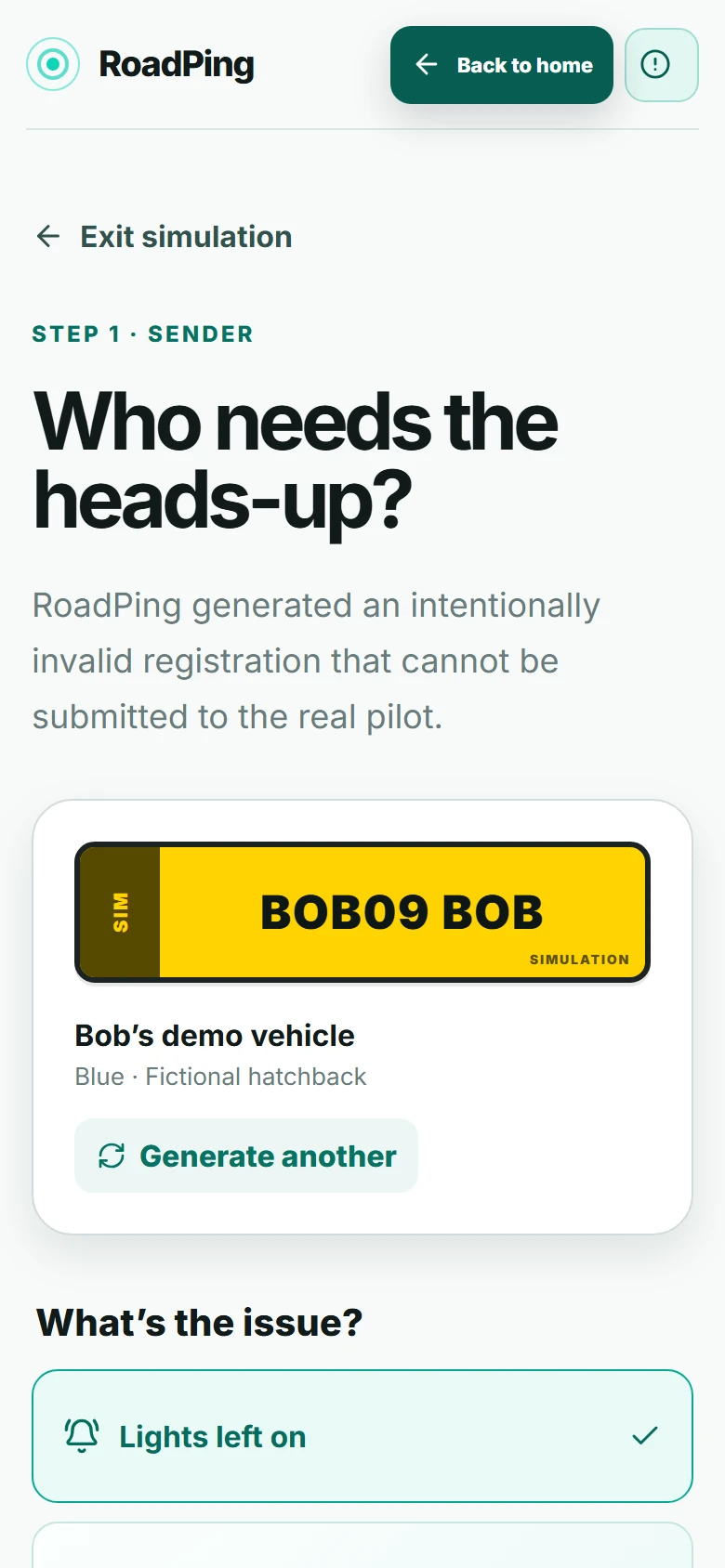
Plate only. The sender enters a UK number plate and picks the issue from a short list, such as lights left on, a flat tyre or a blocked driveway.
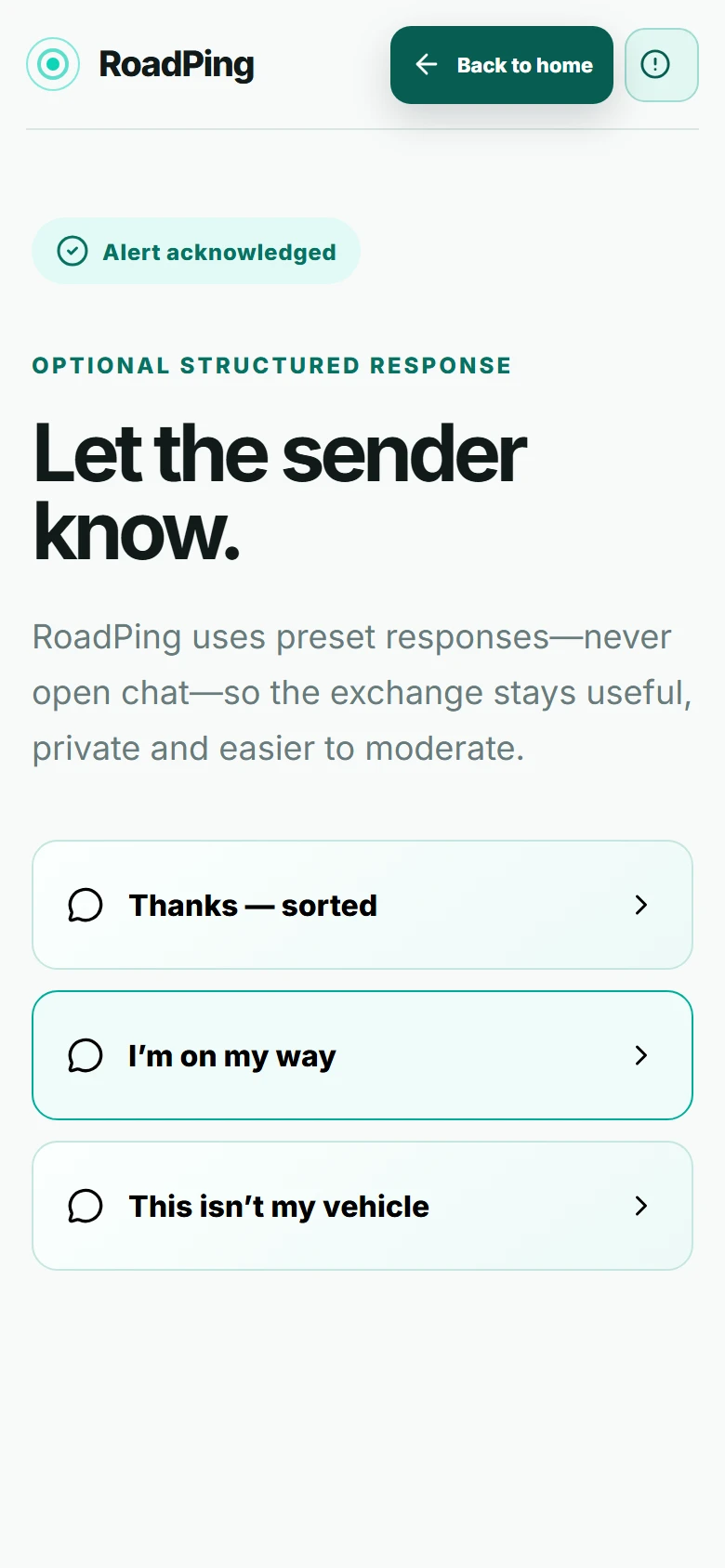
Structured, not chat. Alerts and replies are presets, which keeps the exchange useful, polite and easy to moderate.
Owners opt in. Owners register their own vehicles and choose which alerts they receive.
Private by design: our intent. In RoadPing as designed, neither the sender nor the owner sees the other's identity or contact details. That principle is central to the product, and we intend to honour it in full.
The parts that deliver it to real people, vehicle ownership checks and notification delivery, are still being built, so today it is a design intent rather than a proven guarantee.
How it works
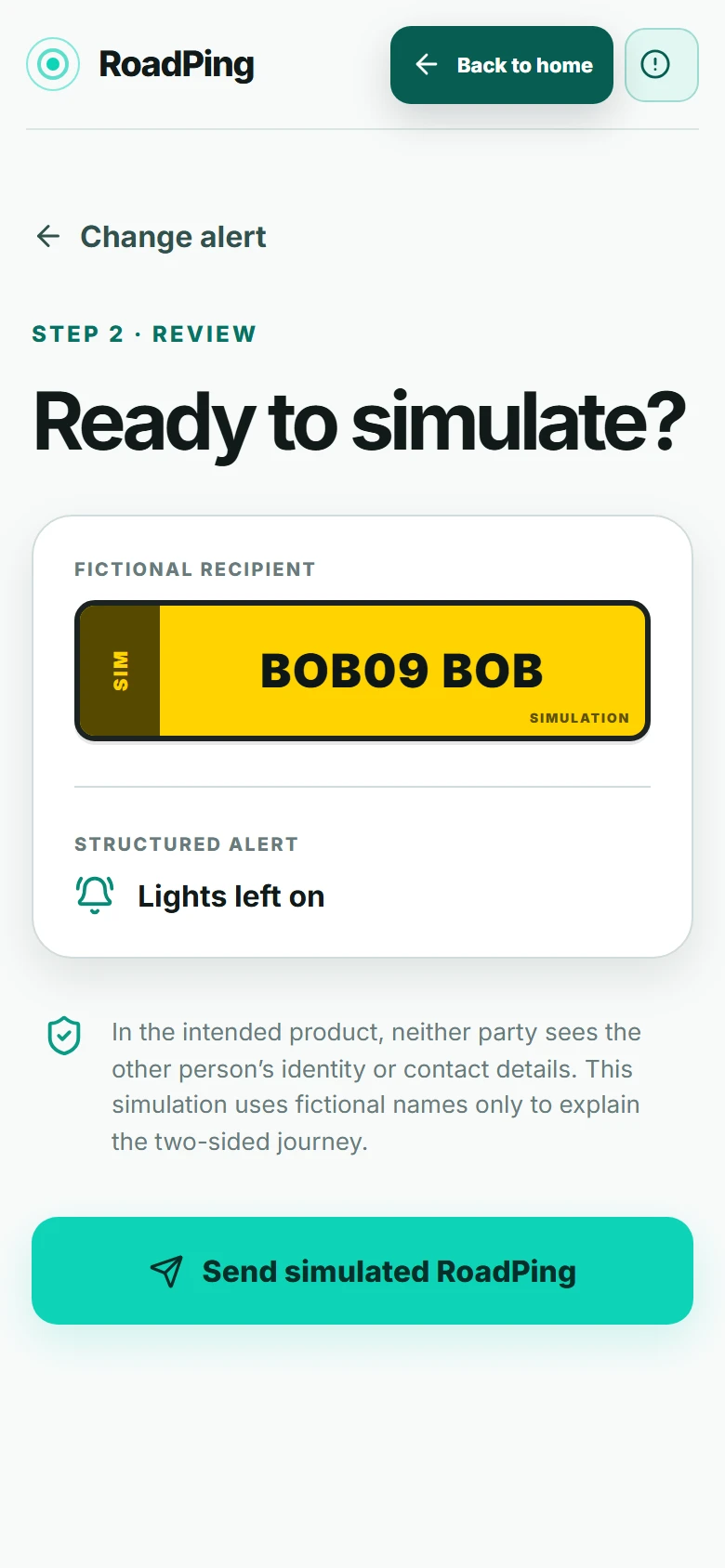
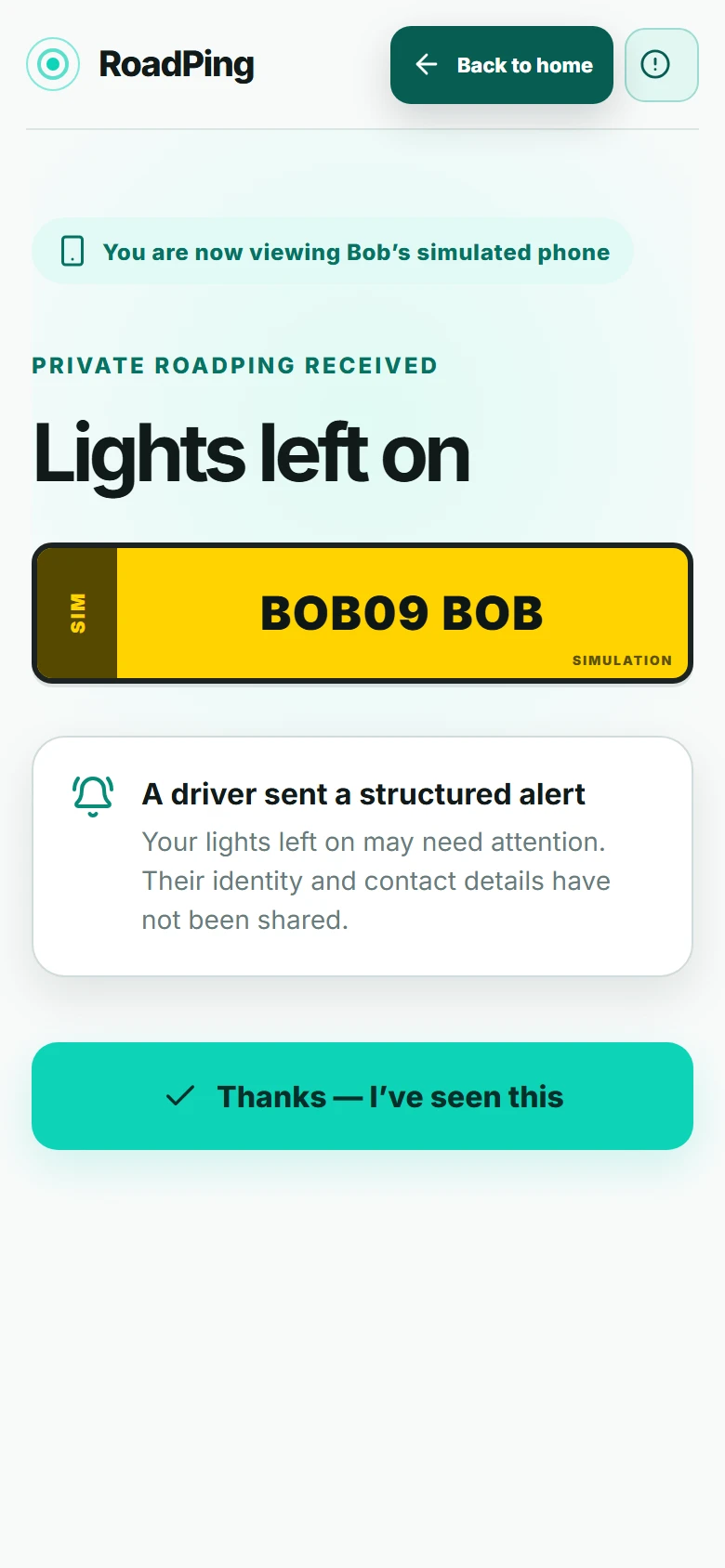
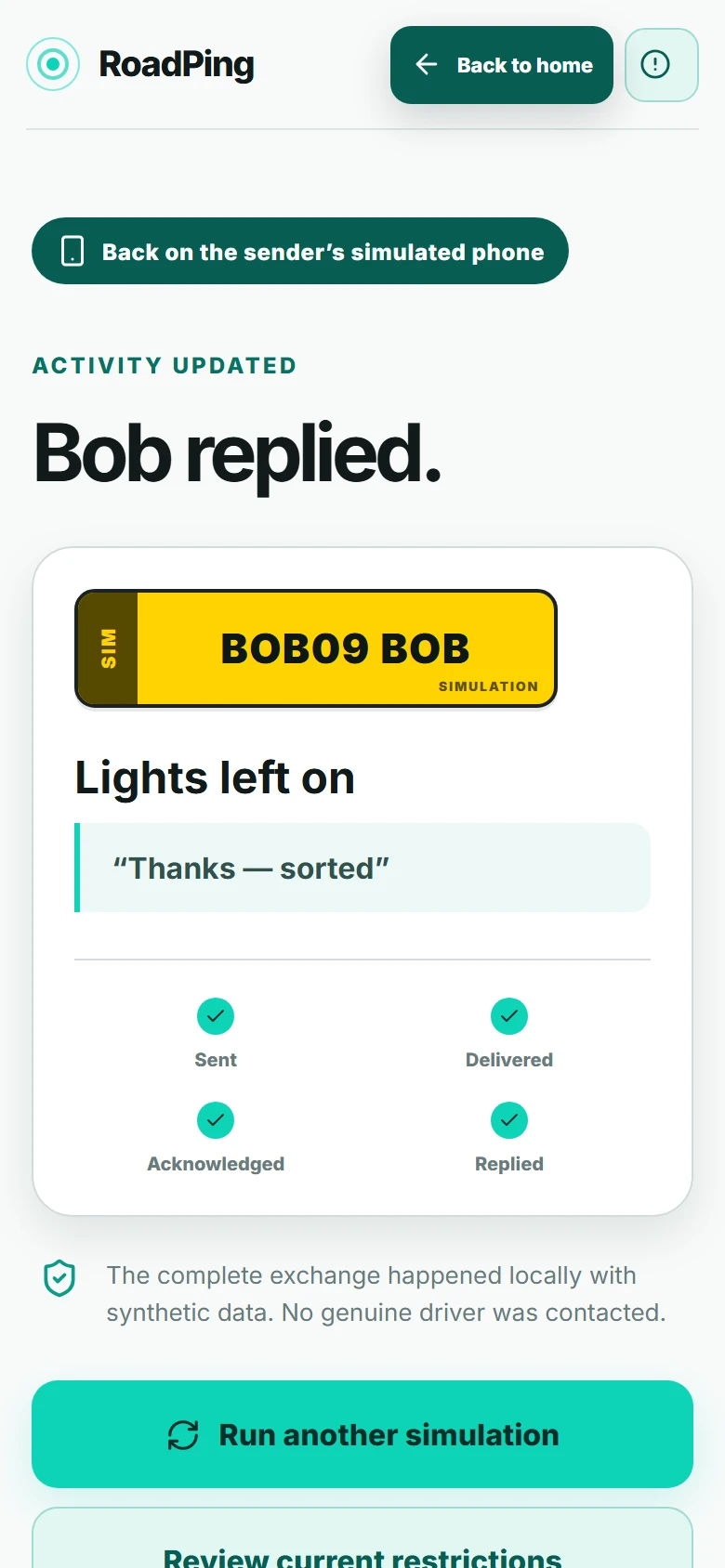
Screens from the public simulation at roadping.co.uk, using a fictional driver and plate. Nothing is sent or saved.
1. Choose the issue. The sender enters the plate and picks what is wrong.2. Review and send. One structured alert, checked before it goes.3. The owner is told. A structured alert, with no sender details shown.4. A safe reply. Preset responses only, never open chat.5. Loop closed. Sent, delivered, acknowledged, replied.
The build
Web app: Next.js, hosted on Vercel at roadping.co.uk, designed mobile-first.
Sign-in: Clerk, with passwordless email codes for approved pilot testers and server-side protection of every private route.
Data: a Supabase database hosted in London for profiles, vehicle claims, alerts, preferences, reports and blocks, reached only from the server.
Transparency: public pages explain what the product is, what the simulation does, and the current test and readiness status.
Testing (24 September 2026): 6 unit tests, 15 component tests and 11 mobile-browser tests passing, a clean production build and no known dependency vulnerabilities.
Private pilot
Where it is now
Working now: the public site and simulation, tester sign-in, and the sender and owner journeys shown above.
Before real users:
Verifying that a person really owns the vehicle they register.
Delivering alerts to owners by email or push notification, without revealing the sender.
A UK GDPR review, covering lawful basis, retention, privacy notice and data-subject requests.
Monitoring, backups and a process for handling abuse reports.
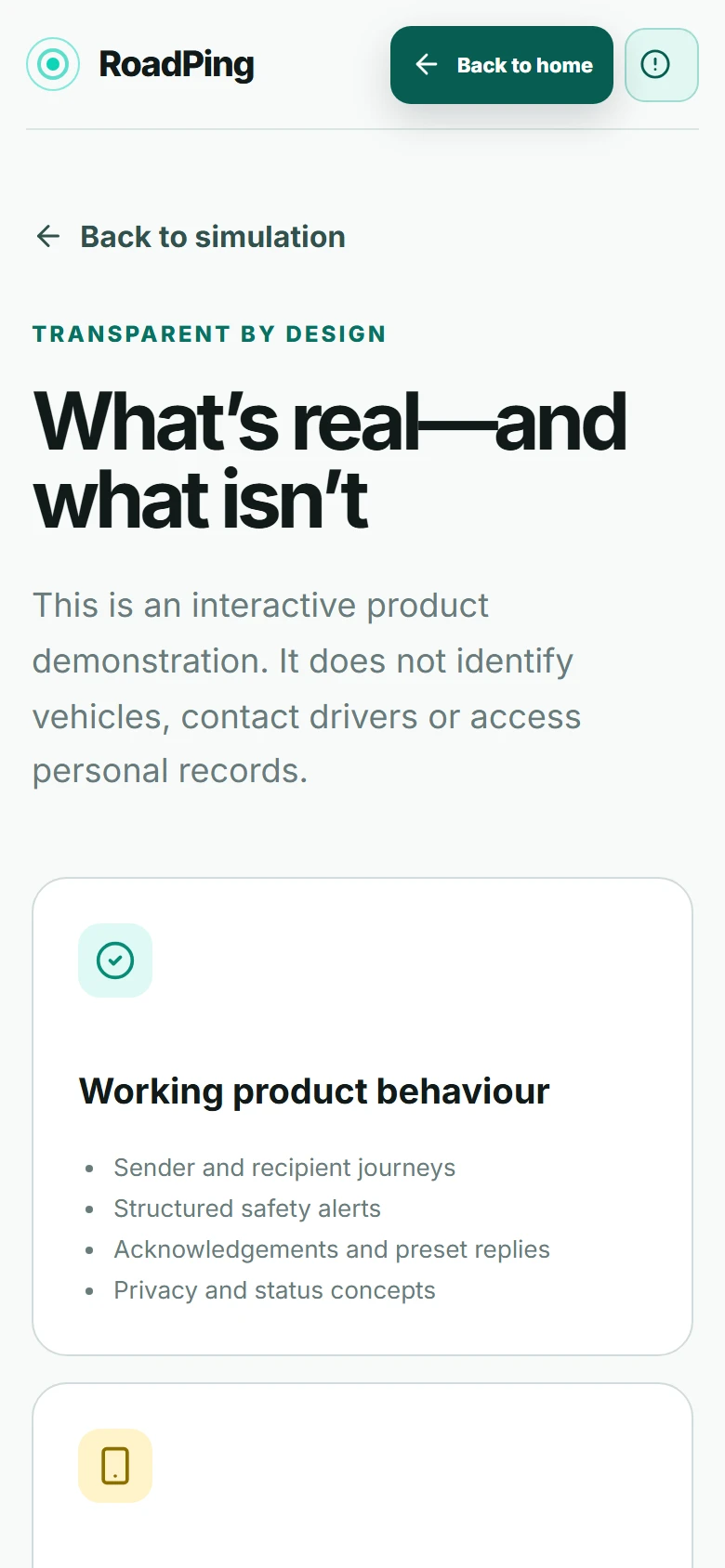
Until those are in place, RoadPing does not identify vehicles, contact drivers or hold real vehicle data.
The app says plainly what is real and what is simulated.
Try it yourself. The simulation takes about two minutes and uses only fictional data.