Control Evidence: from screenshots to re-verifiable checks
The idea
A portfolio prototype that pulls live evidence from five sandbox or project systems and maps findings to selected control IDs. It makes gaps visible and lets a reviewer re-check the underlying state.
Show the full caseHide the full case
The demonstrator connects to AWS, GitHub, Vercel, Microsoft Entra and Aikido Security. It records scan history, distinguishes passing, failing and unknown checks, and shows how a newly failing check can enter a remediation workflow. Some findings remain deliberately open so the demo does not suggest that every problem has been resolved.
The architecture distinguishes implemented paths from an illustrated future Vanta custom-test integration. This is not a production GRC platform or a substitute for an audit.


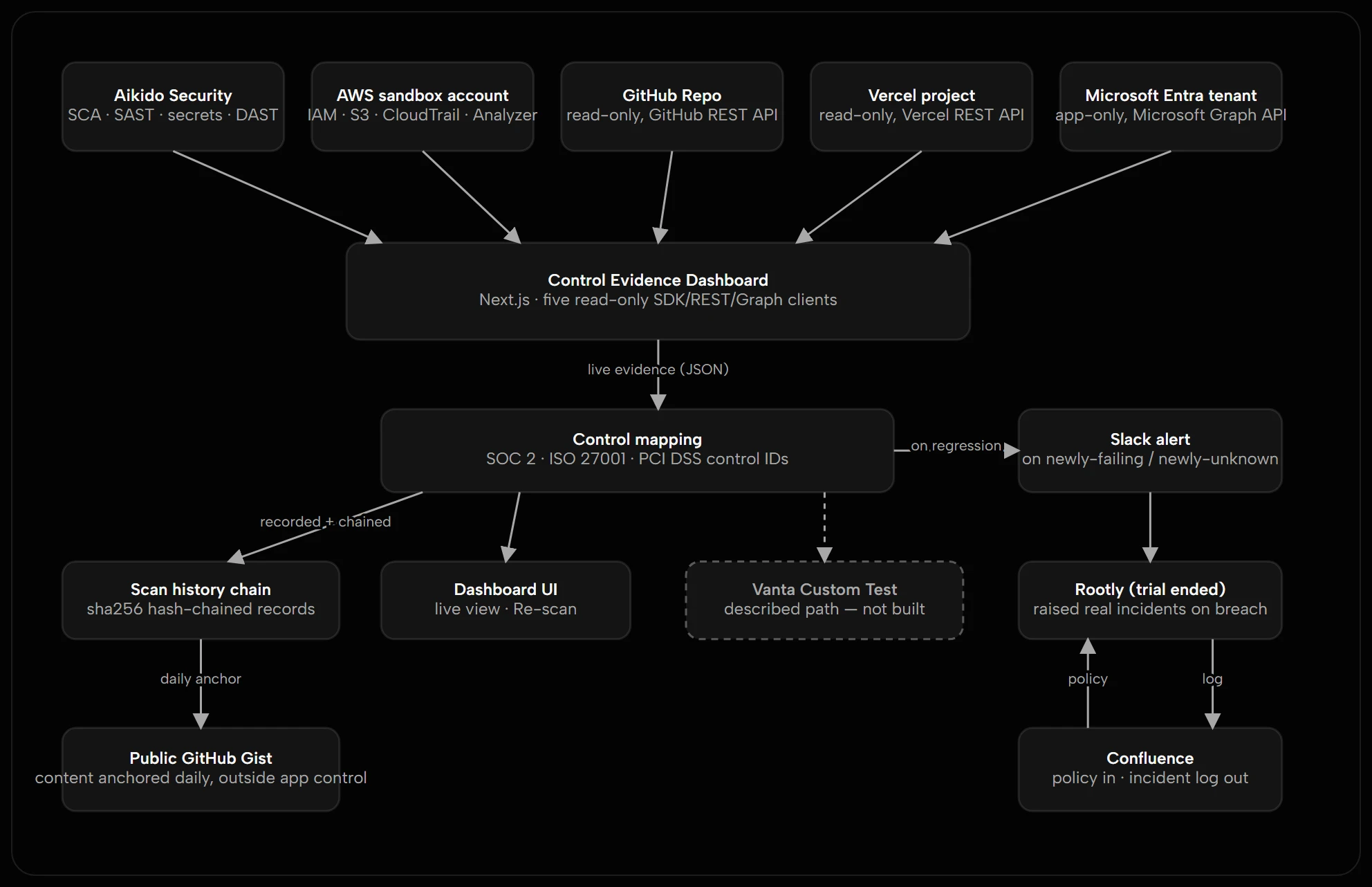
Built as a personal portfolio demonstrator. Its live integrations and evidence views need a separate public-sandbox review before open exploration.


